

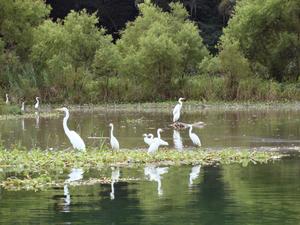
UMass Amherst researchers have developed a community-based framework to manage ecological threats, focusing on traditional knowledge for sustainable conservation. This framework, reported in PLOS ONE, is designed for varied landscapes, initially applied to the Lake Yojoa watershed in Honduras. Lead author Ana Quiñónez Camarillo emphasizes that many under-resourced countries struggle to gather local ecological data, often leading to ineffective top-down conservation strategies.
The Lake Yojoa watershed is crucial for biodiversity, tourism, fishing, and aquaculture, facing water quality concerns influenced by local practices. To address this, the researchers created a Threats, Consequences, and Solutions (TCS) framework that connects local perceptions to larger ecological issues. They conducted 224 surveys in the watershed, gathering data on threats like deforestation and its impacts on water quality.
The TCS framework aims to develop equitable solutions by aligning conservation efforts with community needs. This study highlights the importance of integrating local input into environmental policies for better outcomes.
