
Close Menu
Terrain News
  • Environmental Science
  • Landforms & Habitats
  • Extreme Events
  • Watershed Restoration
  • Wildfire
What's Hot

Oregon’s Forestry Nominee: A Seasoned Expert in Wildfire Management

$6.3 Million Grant Launched for State Forest Restoration by Wilton Simpson

Maui’s Journey to Recovery: A Guide to Responsible Visiting After the 2023 Wildfires

Facebook X (Twitter) Instagram
Facebook X (Twitter) Instagram Pinterest
Terrain News
TerrainWorks
  • Environmental Science
  • Landforms & Habitats
  • Extreme Events
  • Watershed Restoration
  • Wildfire
Terrain News
You are at:Home»Watershed & Environmental Science»Impact of Land Development and Road Salt on Streamwater Chemistry in Southeastern Pennsylvania Watersheds
Watershed & Environmental Science

Impact of Land Development and Road Salt on Streamwater Chemistry in Southeastern Pennsylvania Watersheds

Terrain NewsBy Terrain NewsFebruary 25, 2025052 Mins Read
Share Facebook Twitter Pinterest LinkedIn Tumblr Email
Impact Of Land Development And Road Salt On Streamwater Chemistry
Share
Facebook Twitter LinkedIn Pinterest Email

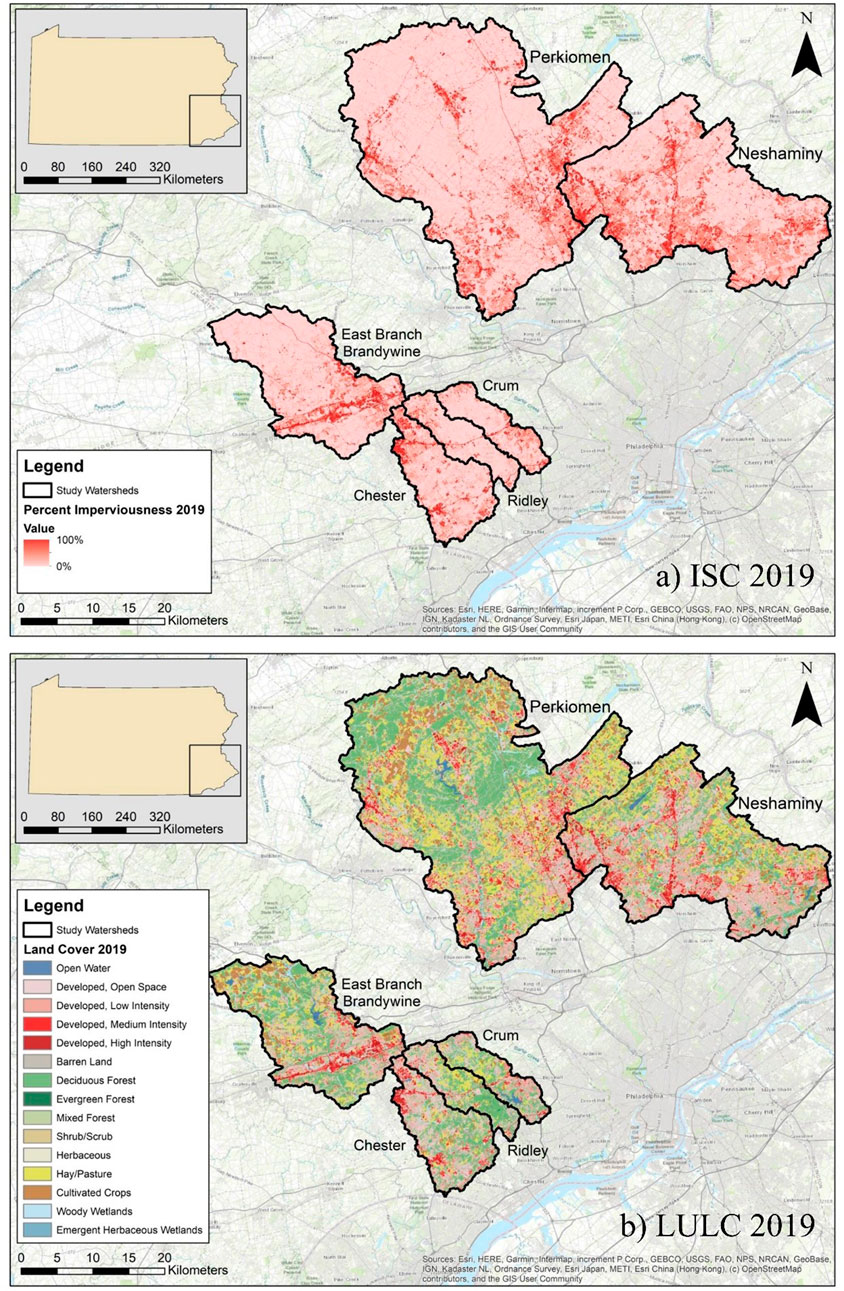
The article discusses the freshwater salinization syndrome (FSS) occurring in urbanized areas of northern regions, particularly due to the application of road deicing salts. Over time, studies have shown increases in sodium (Na+) and chloride (Cl−) concentrations in rivers and streams, especially in watersheds with high impervious surface cover (ISC). The influx of these ions leads to cation exchange reactions in soils, displacing calcium (Ca2+), magnesium (Mg2+), and potassium (K+), thereby increasing their concentrations in waterways over time.

The research, based on a 20+ year dataset from six southeastern Pennsylvania watersheds, highlights that the use of road salt and urban development are primary drivers of major ion increases. Key findings include a significant rise in Na+, Ca2+, Mg2+, and Cl−, with annual water quality trends showing substantial increases across all watersheds. Conversely, sulfate (SO42-) concentrations generally decreased, likely due to stricter air pollution regulations.

Corrosivity indicators, such as the Chloride to Sulfate Mass Ratio (CSMR) and Larson Ratio (LR), showed rising trends, indicating an increased risk of corrosion in drinking water infrastructure, particularly for lead and iron pipes. Notably, Na+ concentrations frequently exceeded the U.S. Environmental Protection Agency’s recommended levels for low sodium diets, raising health concerns. Thus, road salt application and urban expansion are profoundly altering freshwater systems, warranting ongoing monitoring to address potential public health and infrastructure issues.

The study underscores the complex interactions between road salt usage, land development, subsurface water dynamics, and their implications for water quality and human health, advocating for improved management practices to mitigate these effects.

Source link

Chemistry Development Impact Land Pennsylvania Road Salt Southeastern Streamwater Watersheds
Share. Facebook Twitter Pinterest LinkedIn Tumblr Email
Previous ArticleExploring Earth’s Mysteries: Insights from the AGU 2021 Fall Meeting
Next Article Oregon Governor Tina Kotek Explores Wildfire Funding in Recent Discussions
leebenda
Terrain News
  • Website

Related Posts

Shapiro Administration Commits Over $17 Million to Pennsylvania Conservation Efforts

January 23, 2026

Transforming Our Understanding of Climate Change: Insights from NOAA

January 22, 2026

Evaluating Watershed Health Ahead of Huron River Day 2024

January 20, 2026
Top Posts

Steamboat Secures $5 Million for River Revitalization

January 25, 202520 Views

Harnessing Machine Learning to Enhance Extreme Weather Alerts

January 8, 202519 Views

Influence of Stratospheric Conditions on Extreme Weather in North America

February 2, 202515 Views
Stay In Touch
  • Facebook
  • YouTube
  • TikTok
  • WhatsApp
  • Twitter
  • Instagram
Most Popular

Steamboat Secures $5 Million for River Revitalization

January 25, 202520 Views

Harnessing Machine Learning to Enhance Extreme Weather Alerts

January 8, 202519 Views

Influence of Stratospheric Conditions on Extreme Weather in North America

February 2, 202515 Views
Don't Miss

Oregon’s Forestry Nominee: A Seasoned Expert in Wildfire Management

$6.3 Million Grant Launched for State Forest Restoration by Wilton Simpson

Maui’s Journey to Recovery: A Guide to Responsible Visiting After the 2023 Wildfires

Popular This Week

Empowering Change for a Sustainable Future

$6.3 Million Grant Launched for State Forest Restoration by Wilton Simpson

DEP Allocates $17.3 Million for 89 Local Projects to Enhance Streams and Restore Habitats Across 40 Counties

© 2026 Terrain News. All Rights Reserved.
  • About Us
  • Privacy Policy
  • Terms and Conditions
  • Disclaimer

Type above and press Enter to search. Press Esc to cancel.