

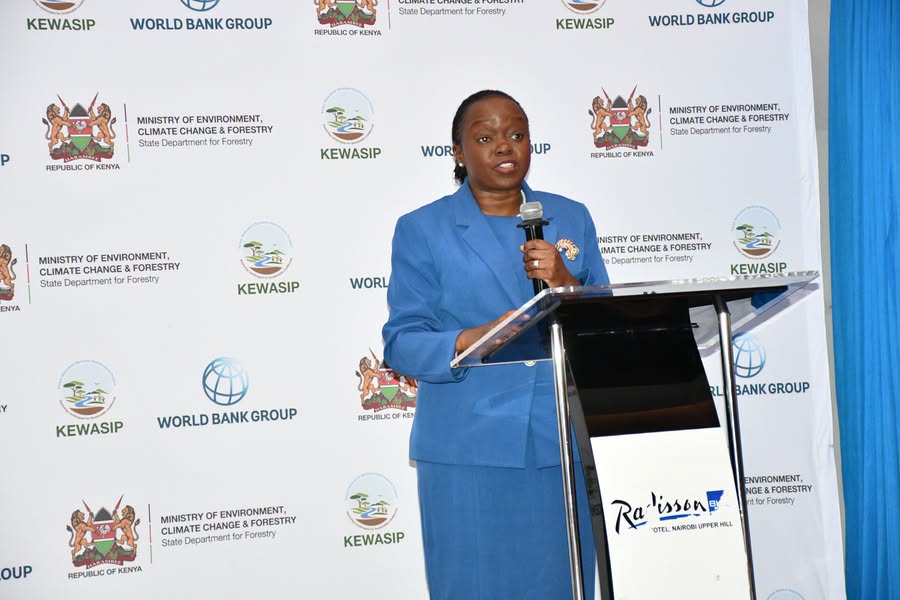
Kenya has launched the Kenya Watershed Services Improvement Project (KEWASIP), a five-year initiative funded by the World Bank with a budget of $200 million (approximately KSh26 billion). The project aims to restore 200,000 hectares of degraded ecosystems across 12 counties, focusing on five priority landscapes: Marsabit Hills, Marmanet, Nyambene Hills, Chyulu Hills, and Shimba Hills. (kenews.co.ke)
The initiative seeks to rehabilitate critical water catchments, improve land management, and enhance community resilience to climate change. It is expected to directly and indirectly benefit approximately 750,000 people, with a particular emphasis on Community Interest Groups, nature-based enterprises, and marginalized communities. (africatimesnetwork.co.ke)
Environment Cabinet Secretary Dr. Deborah Barasa emphasized that the project goes beyond traditional tree planting by addressing the root causes of degradation, integrating landscape and watershed approaches, and promoting biodiversity alongside sustainable economic opportunities for communities. (kenews.co.ke)
KEWASIP aligns with Kenya’s National Landscape and Ecosystem Restoration Strategy (NLERS) 2025–2032, which targets the restoration and conservation of 10.6 million hectares of degraded landscapes and ecosystems by 2032. (forestry.go.ke)
The project is a collaborative effort involving national and county governments, the Kenya Forest Service, the Kenya Forestry Research Institute, the National Environment Management Authority, and the Water Resources Authority. It aims to strengthen climate resilience, improve water security, and enhance livelihoods for communities dependent on natural resources. (kenews.co.ke)
