

Close Menu
Terrain News
  • Environmental Science
  • Landforms & Habitats
  • Extreme Events
  • Watershed Restoration
  • Wildfire
What's Hot

AI Breakthrough in Weather Forecasting: Harnessing Physics for Extreme Predictions

Coastal Resilience Grants Boost Restoration Efforts for Tribes and Underserved Communities

Innovative STEM Learning Opportunities at Chesapeake Bay – NOAA Fisheries

Facebook X (Twitter) Instagram
Facebook X (Twitter) Instagram Pinterest
Terrain News
TerrainWorks
  • Environmental Science
  • Landforms & Habitats
  • Extreme Events
  • Watershed Restoration
  • Wildfire
Terrain News
You are at:Home»Watershed & Environmental Science»Unveiling Microbial Diversity and Resistance in River Biofilms through Long-Read Sequencing
Watershed & Environmental Science

Unveiling Microbial Diversity and Resistance in River Biofilms through Long-Read Sequencing

Terrain NewsBy Terrain NewsJanuary 8, 2025002 Mins Read
Share Facebook Twitter Pinterest LinkedIn Tumblr Email
Unveiling Microbial Diversity And Resistance In River Biofilms Through Long Read
Share
Facebook Twitter LinkedIn Pinterest Email

The article addresses the growing health concern of antibiotic resistance (AR), primarily stemming from the misuse and overuse of antibiotics in medicine and agriculture, promoting the spread of antibiotic resistance genes (ARGs) through horizontal gene transfer among bacteria. It emphasizes that fecal contamination, particularly from wastewater treatment plants and agricultural runoff, is a significant source of ARGs in the environment.

The focus of the study is periphyton—complex communities of microorganisms in freshwater biofilms—that serve as hotspots for AR transmission. The study uniquely employs long-read sequencing technology to characterize the microbiome and resistome of periphyton collected from various sites over a year in central Ohio, aiming to evaluate the clinical relevance and transmissibility of ARGs.

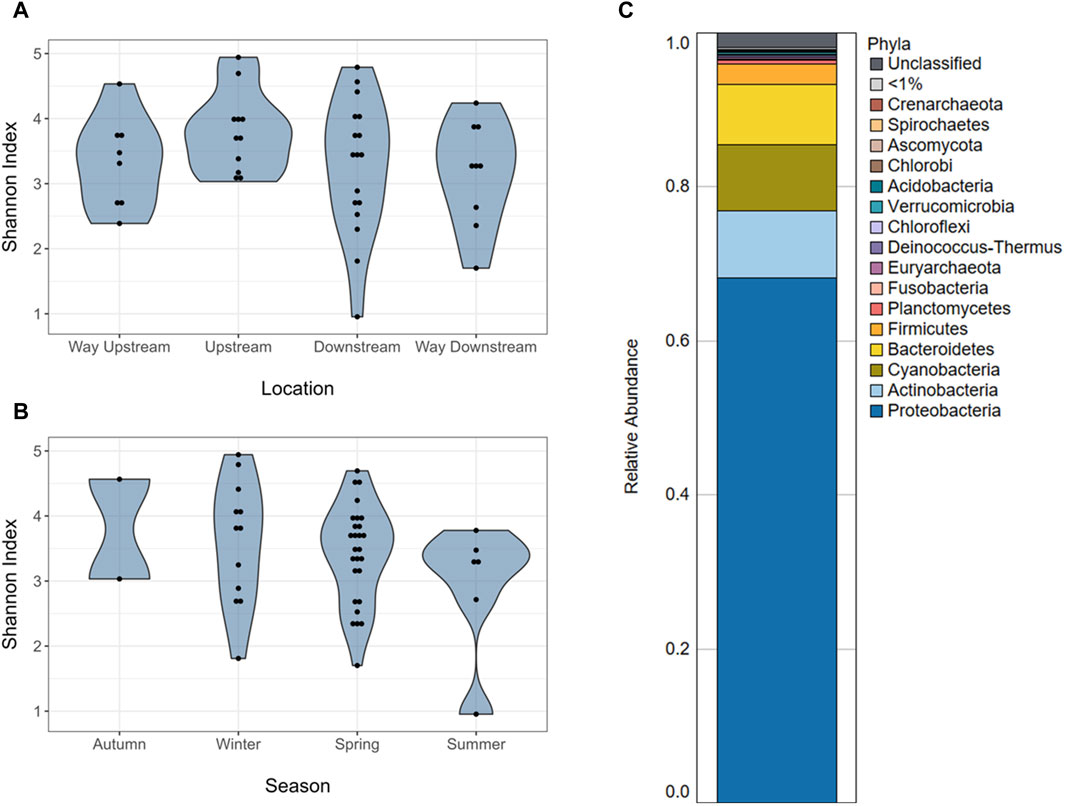
Findings show substantial ARG diversity, with 88 unique ARGs from 17 antibiotic classes primarily related to multidrug resistance. The microbial composition was dominated by Proteobacteria, and key hosts of ARGs included Escherichia and Pseudomonas. Seasonal and locational shifts were noted in microbiome composition, with upstream sites showing lower levels of fecal-associated bacteria compared to downstream urban areas, indicating the impact of urbanization on freshwater microbiomes.

Importantly, the study suggests that while periphyton contribute to the overall environmental burden of AR due to their diversity and mobile genetic elements, they may not be significant reservoirs of clinically relevant ARGs in pathogenic hosts. The findings reinforce the need for environmental considerations in addressing the global public health crisis of AR through a One Health framework.

Source link

Biofilms Diversity LongRead Microbial Resistance River Sequencing Unveiling
Share. Facebook Twitter Pinterest LinkedIn Tumblr Email
Previous ArticleCelebrating 75 Years of Environmental Stewardship at The Watershed Institute
Next Article Mountains of Diversity: How Landforms Shape China’s Unique Flora
leebenda
Terrain News
  • Website

Related Posts

Innovative STEM Learning Opportunities at Chesapeake Bay – NOAA Fisheries

January 26, 2026

Transforming Our Understanding of Climate Change: Insights from NOAA

January 22, 2026

Evaluating Watershed Health Ahead of Huron River Day 2024

January 20, 2026
Top Posts

Steamboat Secures $5 Million for River Revitalization

January 25, 202520 Views

Harnessing Machine Learning to Enhance Extreme Weather Alerts

January 8, 202519 Views

Influence of Stratospheric Conditions on Extreme Weather in North America

February 2, 202515 Views
Stay In Touch
  • Facebook
  • YouTube
  • TikTok
  • WhatsApp
  • Twitter
  • Instagram
Most Popular

Steamboat Secures $5 Million for River Revitalization

January 25, 202520 Views

Harnessing Machine Learning to Enhance Extreme Weather Alerts

January 8, 202519 Views

Influence of Stratospheric Conditions on Extreme Weather in North America

February 2, 202515 Views
Don't Miss

AI Breakthrough in Weather Forecasting: Harnessing Physics for Extreme Predictions

Coastal Resilience Grants Boost Restoration Efforts for Tribes and Underserved Communities

Innovative STEM Learning Opportunities at Chesapeake Bay – NOAA Fisheries

Popular This Week

DEP Allocates $17.3 Million for 89 Local Projects to Enhance Streams and Restore Habitats Across 40 Counties

Deschutes County Explores Biochar Solution for Wildfire Waste Management

Coastal Resilience Grants Boost Restoration Efforts for Tribes and Underserved Communities

© 2026 Terrain News. All Rights Reserved.
  • About Us
  • Privacy Policy
  • Terms and Conditions
  • Disclaimer

Type above and press Enter to search. Press Esc to cancel.