

Summary of the Article
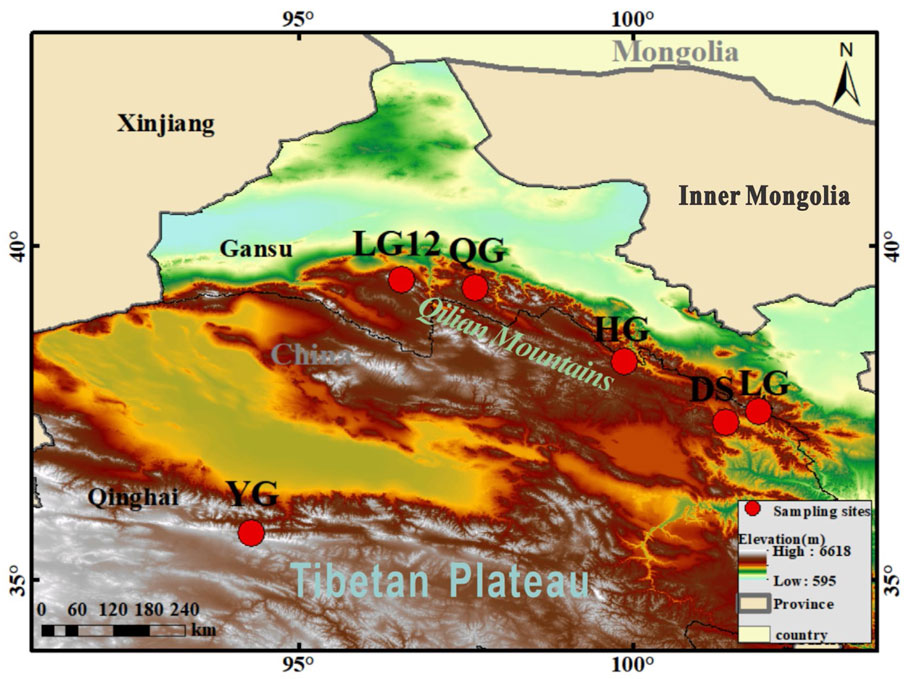
This study investigates heavy metal concentrations in suspended particulate matter (SPM) from glacier meltwater runoff across various watersheds in the northeast Tibetan Plateau during June-July 2017. A total of 17 trace elements, including heavy metals like Cd and Sb, were analyzed to assess their concentration, spatial distribution, and implications for water quality amid regional human activities.
Key Findings:
- The Yuzhufeng Glacier basin exhibited the highest concentrations of heavy metals, with Ba reaching 1,551.6 μg/L, while the Qiyi Glacier basin had the lowest, ranging from 0.02 to 85.05 μg/L. Other basins had intermediate concentrations.
- Enrichment Factors (EFs) indicated that heavy metal pollution was primarily influenced by anthropogenic activities, especially in downstream regions. Elements with higher EFs, such as Cd and Sb, were likely sourced from human activities, contrasting with metals predominantly from crustal dust.
- The study highlighted spatial variability in contamination levels, with the Yuzhufeng and Laohugou Glacier basins showing greater enrichment compared to others.
- Overall, while the northeastern Tibetan Plateau’s water quality appeared relatively clean, notable effects from regional activities like mining and transportation were evident.
- Air mass trajectory analysis suggested that atmospheric pollutants could migrate from nearby urban areas, depositing heavy metals into glacial ice and subsequently being released during melt.
The results underscore the significance of understanding heavy metal distribution in glacial watersheds to evaluate the impacts of climate change and anthropogenic influences on high-altitude water quality, contributing essential insights for environmental management in this sensitive region.
Conclusion: The study reveals the complexity of heavy metal sourcing in glacier meltwater, affected both by natural processes and significant human impacts, highlighting urgent needs for monitoring and policy action in preserving high-altitude water environments.
