
Close Menu
Terrain News
  • Environmental Science
  • Landforms & Habitats
  • Extreme Events
  • Watershed Restoration
  • Wildfire
What's Hot

What Awaits Austin Next?

Chesapeake Bay Watershed Agreement Strengthens Partnership for a Sustainable Future

Coordinated Efforts for Watershed Restoration Projects

Facebook X (Twitter) Instagram
Facebook X (Twitter) Instagram Pinterest
Terrain News
TerrainWorks
  • Environmental Science
  • Landforms & Habitats
  • Extreme Events
  • Watershed Restoration
  • Wildfire
Terrain News
You are at:Home»Watershed & Environmental Science»Exploring Soil Degradation in Andean Watersheds Through Remote Sensing
Watershed & Environmental Science

Exploring Soil Degradation in Andean Watersheds Through Remote Sensing

Terrain NewsBy Terrain NewsJanuary 28, 2025072 Mins Read
Share Facebook Twitter Pinterest LinkedIn Tumblr Email
Exploring Soil Degradation In Andean Watersheds Through Remote Sensing
Share
Facebook Twitter LinkedIn Pinterest Email

The article discusses the impact of land degradation on livelihoods and the environment, particularly focusing on soil degradation due to anthropogenic activities. It defines soil degradation as a decline in soil quality that impairs its ability to support life, often resulting from erosion, salinity, and soil compaction. Such conditions lead to detrimental outcomes like reduced fertility, eutrophication, water shortages, and economic hardship. Erosion is exacerbated by the lack of vegetation cover, which can result from deforestation, agricultural expansion, and urbanization.

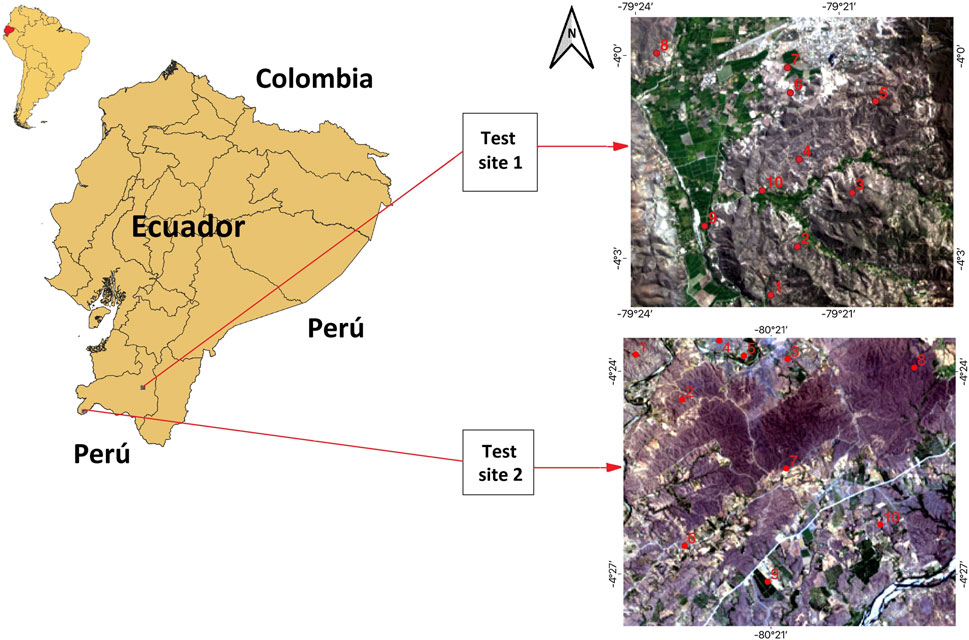
The study utilizes five spectral indices—Normalized Difference Vegetation Index (NDVI), Bare Soil Index (BSI), Grain Size Index (GSI), Normalized Difference Impervious Surface Index (NDISI), and Salinity Index (SI)—to monitor soil degradation in semi-arid regions of the Ecuadorian Andes. Remote sensing techniques, specifically using Landsat satellite imagery, are employed for this analysis. Data collection involved field surveys to correlate spectral index values with actual soil conditions.

Results indicated varying degrees of vegetation cover loss, salinity, and soil imperviousness across two test sites, with NDVI effectively distinguishing between vegetated and non-vegetated areas. The indices provided useful insights into soil degradation processes, with vegetation loss being the most significant issue identified. The study emphasizes the necessity for sustainable soil management practices, such as reforestation and regulated agricultural methods, to mitigate degradation impacts. It suggests potential future applications of these spectral indices for ongoing monitoring and management of soil health in Andean regions.

In summary, the work highlights the importance of integrating remote sensing technologies with field-based observations to assess soil degradation factors and promote effective land management strategies.

Source link

Andean Degradation Exploring Remote Sensing Soil Watersheds
Share. Facebook Twitter Pinterest LinkedIn Tumblr Email
Previous ArticleEnhancing Shoreline Restoration Through Coastal Landform Insights
Next Article Biden-Harris Administration Invests $7.2 Million to Enhance Extreme Weather Climate Projections
leebenda
Terrain News
  • Website

Related Posts

Chesapeake Bay Watershed Agreement Strengthens Partnership for a Sustainable Future

January 17, 2026

Empowering Future Watershed Leaders at Millersville

January 16, 2026

Chesapeake Bay Cleanup Efforts Disrupted by Trump Administration

January 14, 2026
Top Posts

Steamboat Secures $5 Million for River Revitalization

January 25, 202520 Views

Harnessing Machine Learning to Enhance Extreme Weather Alerts

January 8, 202519 Views

Influence of Stratospheric Conditions on Extreme Weather in North America

February 2, 202515 Views
Stay In Touch
  • Facebook
  • YouTube
  • TikTok
  • WhatsApp
  • Twitter
  • Instagram
Most Popular

Steamboat Secures $5 Million for River Revitalization

January 25, 202520 Views

Harnessing Machine Learning to Enhance Extreme Weather Alerts

January 8, 202519 Views

Influence of Stratospheric Conditions on Extreme Weather in North America

February 2, 202515 Views
Don't Miss

What Awaits Austin Next?

Chesapeake Bay Watershed Agreement Strengthens Partnership for a Sustainable Future

Coordinated Efforts for Watershed Restoration Projects

Popular This Week

Understanding Why Some Fires Turn Catastrophic: Insights from Delos Analysis Post-LA Wildfires

Celebrating the Wonders of Geodiversity: International Geodiversity Day 2023

Anderson Creek Watershed 2024 Dry Season Water Quality Insights

© 2026 Terrain News. All Rights Reserved.
  • About Us
  • Privacy Policy
  • Terms and Conditions
  • Disclaimer

Type above and press Enter to search. Press Esc to cancel.