

Close Menu
Terrain News
  • Environmental Science
  • Landforms & Habitats
  • Extreme Events
  • Watershed Restoration
  • Wildfire
What's Hot

Reviving the North Cottonwood River: A Success Story in Conservation Efforts

Cayuga Lake Watershed Internship Program Celebrates Annual Symposium

Enhancing Ecosystems: GIS Mapping for Watershed Restoration in Maharashtra

Facebook X (Twitter) Instagram
Facebook X (Twitter) Instagram Pinterest
Terrain News
TerrainWorks
  • Environmental Science
  • Landforms & Habitats
  • Extreme Events
  • Watershed Restoration
  • Wildfire
Terrain News
You are at:Home»Watershed & Environmental Science»Funding for Innovative Research on PFAS in Small Watersheds
Watershed & Environmental Science

Funding for Innovative Research on PFAS in Small Watersheds

Terrain NewsBy Terrain NewsMay 19, 2026001 Min Read
Share Facebook Twitter Pinterest LinkedIn Tumblr Email
Funding For Innovative Research On Pfas In Small Watersheds
Share
Facebook Twitter LinkedIn Pinterest Email

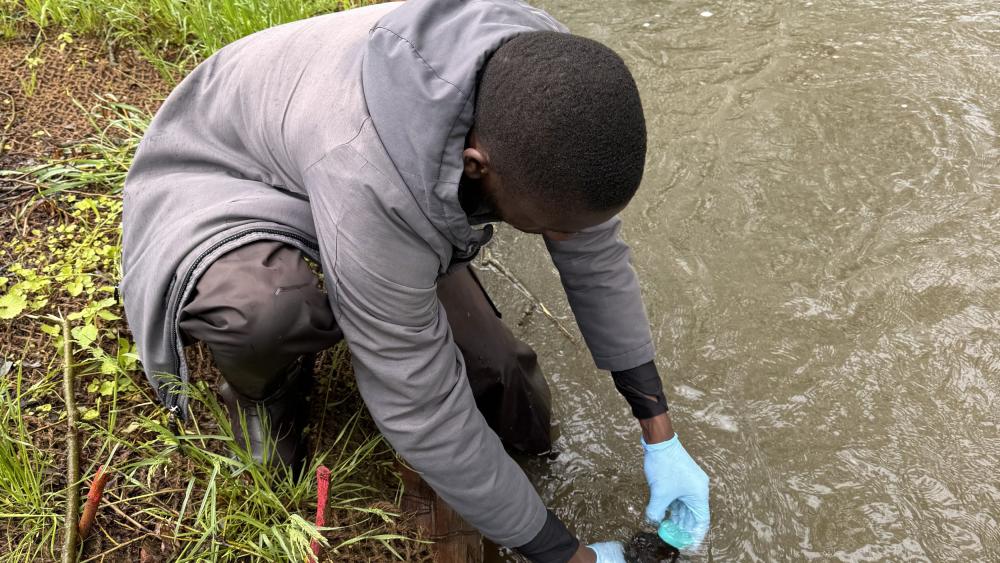
Researchers at Penn State’s College of Agricultural Sciences have secured a nearly $309,000 grant from the U.S. Geological Survey to study per- and polyfluoroalkyl substances (PFAS) in small agricultural watersheds of the Chesapeake Bay. These “forever chemicals” can accumulate in the environment and threaten food chains, particularly in farms utilizing biosolids or fluorinated pesticides.

The project aims to help farmers and watershed managers understand PFAS movement and contamination risks. Lead researcher Heather Preisendanz emphasizes the importance of investigating PFAS’s impact on human and ecological health and identifying strategies to mitigate risks. The study will sample surface water, sediment, and aquatic insects, analyzing PFAS alongside other water quality indicators.

Findings will generate new environmental data for local communities and contribute to broader scientific knowledge, aiding in the development of conservation practices for reducing PFAS contamination in water sources. Collaborations for the project include experts in various agricultural and engineering disciplines.

Source link

Funding Innovative PFAS Research Small Watersheds
Share. Facebook Twitter Pinterest LinkedIn Tumblr Email
Previous ArticleBucknell Student Research Influences Stream Restoration Efforts in Milton
Next Article Coast Guard Rescues Stranded Sailor Amid Santa Rosa Island Wildfire
leebenda
Terrain News
  • Website

Related Posts

Cayuga Lake Watershed Internship Program Celebrates Annual Symposium

September 6, 2026

Uncovering Climate-Resilient Habitats Through Geospatial Insights

September 5, 2026

Massachusetts Boosts Watershed Restoration with New Funding for Regional Coordinators

September 4, 2026
Top Posts

Steamboat Secures $5 Million for River Revitalization

January 25, 202523 Views

Assessing Climate Change and Human Influence on Runoff in a South China Tropical Watershed

February 3, 202520 Views

Impact of Glacier Retreat on Land Use and Ecosystem Services in High Andes

February 3, 202520 Views
Stay In Touch
  • Facebook
  • YouTube
  • TikTok
  • WhatsApp
  • Twitter
  • Instagram
Most Popular

Steamboat Secures $5 Million for River Revitalization

January 25, 202523 Views

Assessing Climate Change and Human Influence on Runoff in a South China Tropical Watershed

February 3, 202520 Views

Impact of Glacier Retreat on Land Use and Ecosystem Services in High Andes

February 3, 202520 Views
Don't Miss

Reviving the North Cottonwood River: A Success Story in Conservation Efforts

Cayuga Lake Watershed Internship Program Celebrates Annual Symposium

Enhancing Ecosystems: GIS Mapping for Watershed Restoration in Maharashtra

Popular This Week

Restoring Nature: How the Removal of a California Dam Revived Steelhead Trout Habitats

Empowering Kids to Safeguard Canandaigua Lake at Science Camp

Federal Wildlife Officer Presumed Lost in Oklahoma Wildfire

© 2026 Terrain News. All Rights Reserved.
  • About Us
  • Privacy Policy
  • Terms and Conditions
  • Disclaimer

Type above and press Enter to search. Press Esc to cancel.