
Close Menu
Terrain News
  • Environmental Science
  • Landforms & Habitats
  • Extreme Events
  • Watershed Restoration
  • Wildfire
What's Hot

Evaluating Watershed Health Ahead of Huron River Day 2024

Columbia River Basin Grants for Toxic Reduction in 2023

Empowering Change for a Sustainable Future

Facebook X (Twitter) Instagram
Facebook X (Twitter) Instagram Pinterest
Terrain News
TerrainWorks
  • Environmental Science
  • Landforms & Habitats
  • Extreme Events
  • Watershed Restoration
  • Wildfire
Terrain News
You are at:Home»Extreme Climate & Geophysical Events»Increasing Frequency and Impact: Insights from the European Environment Agency
Extreme Climate & Geophysical Events

Increasing Frequency and Impact: Insights from the European Environment Agency

Terrain NewsBy Terrain NewsApril 29, 2025011 Min Read
Share Facebook Twitter Pinterest LinkedIn Tumblr Email
Increasing Frequency And Impact: Insights From The European Environment Agency
Share
Facebook Twitter LinkedIn Pinterest Email

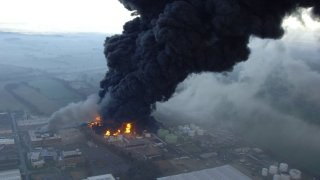
The report “Mapping the impacts of natural hazards and technological accidents in Europe” analyzes hydrometeorological (e.g., storms, floods), geophysical (e.g., earthquakes), and technological hazards (e.g., oil spills). It finds that increased losses are mostly due to more human activity in hazard-prone areas, with better reporting also contributing. Over the period covered, disasters led to nearly 100,000 fatalities, over 11 million affected, and economic losses around EUR 150 billion, with extreme heat events causing over 70,000 deaths in 2003 alone.

Floods and storms were the costliest hazards, accounting for EUR 52 billion and EUR 44 billion in losses, respectively. Geophysical hazards remained stable, while technological accidents had severe ecological impacts, notably from oil spills in 1999 and 2002.

The report emphasizes the need for an Integrated Risk Management approach within the EU, advocating for better local measures and comprehensive data systems to support disaster management. Existing EU policies, such as the Floods Directive and Seveso II Directive, are noted but further implementation is necessary.

Source link

Agency Environment European Frequency Impact Increasing Insights
Share. Facebook Twitter Pinterest LinkedIn Tumblr Email
Previous ArticleRecord $6.6 Million Secured for Habitat Restoration and Wildlife Initiatives Through 2025 Conservation Permits
Next Article Rapidly Evolving Issue
leebenda
Terrain News
  • Website

Related Posts

Understanding Why Some Fires Turn Catastrophic: Insights from Delos Analysis Post-LA Wildfires

January 15, 2026

Severe Weather Alerts for Bali’s Popular Tourist Hotspots

January 15, 2026

Whychus Insights: Unveiling the Source in the Upper Deschutes Watershed

January 13, 2026
Top Posts

Steamboat Secures $5 Million for River Revitalization

January 25, 202520 Views

Harnessing Machine Learning to Enhance Extreme Weather Alerts

January 8, 202519 Views

Influence of Stratospheric Conditions on Extreme Weather in North America

February 2, 202515 Views
Stay In Touch
  • Facebook
  • YouTube
  • TikTok
  • WhatsApp
  • Twitter
  • Instagram
Most Popular

Steamboat Secures $5 Million for River Revitalization

January 25, 202520 Views

Harnessing Machine Learning to Enhance Extreme Weather Alerts

January 8, 202519 Views

Influence of Stratospheric Conditions on Extreme Weather in North America

February 2, 202515 Views
Don't Miss

Evaluating Watershed Health Ahead of Huron River Day 2024

Columbia River Basin Grants for Toxic Reduction in 2023

Empowering Change for a Sustainable Future

Popular This Week

Understanding Why Some Fires Turn Catastrophic: Insights from Delos Analysis Post-LA Wildfires

Celebrating the Wonders of Geodiversity: International Geodiversity Day 2023

Anderson Creek Watershed 2024 Dry Season Water Quality Insights

© 2026 Terrain News. All Rights Reserved.
  • About Us
  • Privacy Policy
  • Terms and Conditions
  • Disclaimer

Type above and press Enter to search. Press Esc to cancel.