


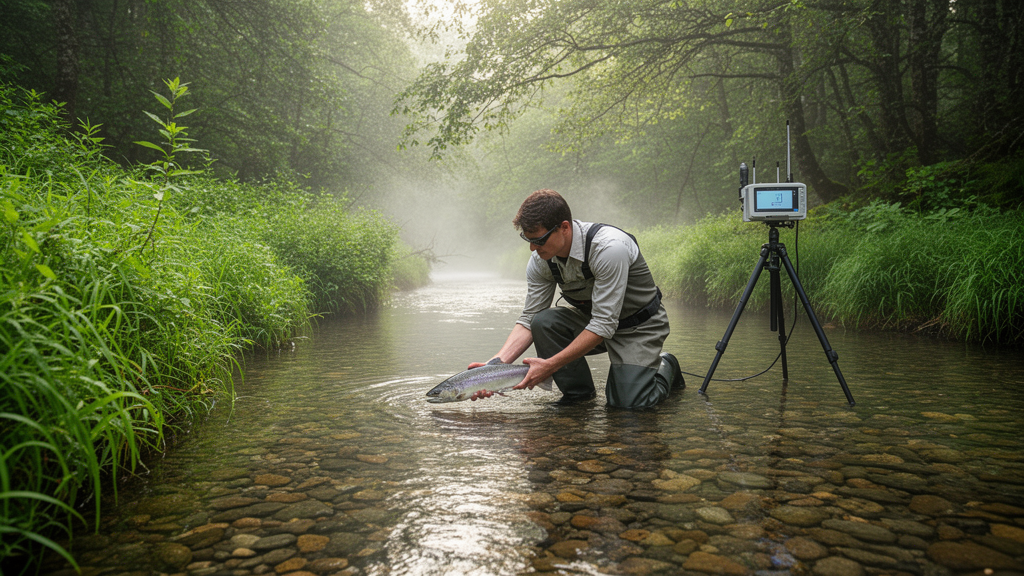
The article discusses the effectiveness of habitat restoration efforts in improving salmon populations, emphasizing the role of Intensively Monitored Watersheds (IMWs). These long-term monitoring sites aim to quantify ecological responses to habitat restoration. Despite the high costs and logistical challenges of collecting data over extended periods, IMWs offer valuable insights into the relationships between habitat actions and fish population recovery.
Historically, studies like the Alsea Watershed Study have influenced forestry regulations by demonstrating the impact of land use on aquatic ecosystems. Findings indicate that ecological signals from restoration can take years to emerge, stressing the importance of continuous monitoring.
Key themes include the necessity of process-based restoration, which reestablishes natural habitat processes, and the promotion of life history diversity in salmon. Tracking juvenile salmon movements is critical for identifying habitat deficiencies that hinder survival.
The article also highlights the complexities of measuring restoration success amidst environmental variability like climate change. For restoration to be effective, it must encompass a significant portion of the watershed and adapt to stakeholder needs, linking scientific findings to management strategies. The authors advocate for a more integrated approach to monitoring and restoration, incorporating new technologies to enhance salmon recovery efforts.
Source link
