


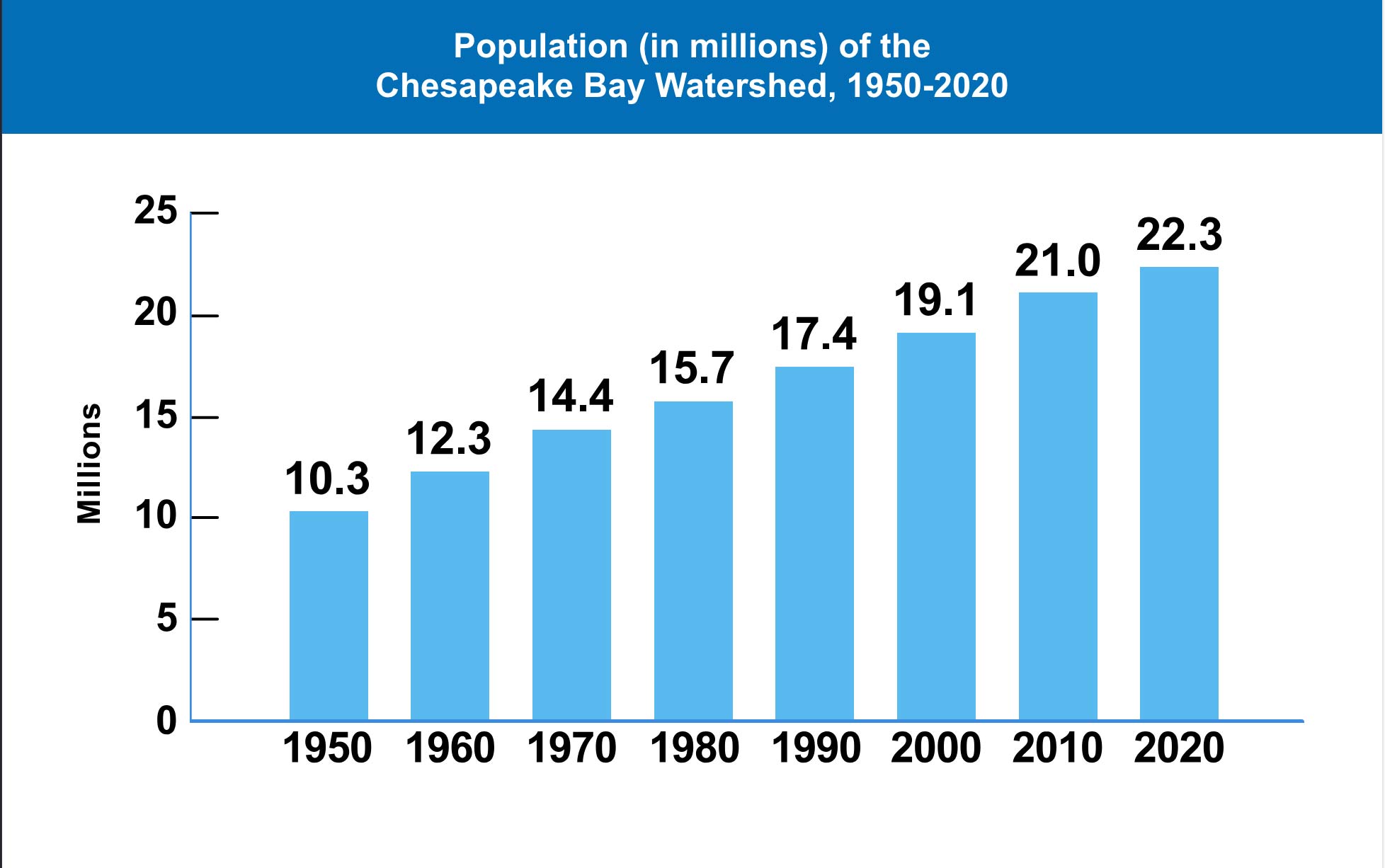
NumbersUSA’s recent study examines the ecological decline of the Chesapeake Bay and its watershed, linking it to population growth driven by immigration. The Chesapeake Bay, America’s largest estuary, has been negatively impacted by human activities, noted in a 2022 report card that gave the bay a D+ grade. While the University of Maryland’s 2023 assessment slightly improved the score, it still reflects significant ecological issues.
The study reveals that the watershed population grew from 16 to 22 million between 1982 and 2017, resulting in the loss of over 5,000 square miles of natural land. Population growth accounted for 58% of this sprawl, increasing to 71% in the recent years analyzed.
The conversion of land for development has led to pollution and habitat loss, undermining water quality and wildlife. Despite clear evidence, many environmentalists overlook population growth as a critical factor in the bay’s deterioration, often focusing instead on less impactful contributors to ecological decline. The study urges that addressing population and immigration can significantly improve conservation efforts for the Chesapeake Bay.
