

Close Menu
Terrain News
  • Environmental Science
  • Landforms & Habitats
  • Extreme Events
  • Watershed Restoration
  • Wildfire
What's Hot

Palisades Fire Anniversary: A Year of Healing and Reflection at Eaton

Coordinated Watershed Protection for Regional Sustainability

Firefighters Battle Major Wildfire Blaze

Facebook X (Twitter) Instagram
Facebook X (Twitter) Instagram Pinterest
Terrain News
TerrainWorks
  • Environmental Science
  • Landforms & Habitats
  • Extreme Events
  • Watershed Restoration
  • Wildfire
Terrain News
You are at:Home»Landforms, Processes & Habitats»Enhancing Shoreline Restoration Through Coastal Landform Insights
Landforms, Processes & Habitats

Enhancing Shoreline Restoration Through Coastal Landform Insights

Terrain NewsBy Terrain NewsJanuary 28, 2025082 Mins Read
Share Facebook Twitter Pinterest LinkedIn Tumblr Email
Enhancing Shoreline Restoration Through Coastal Landform Insights
Share
Facebook Twitter LinkedIn Pinterest Email

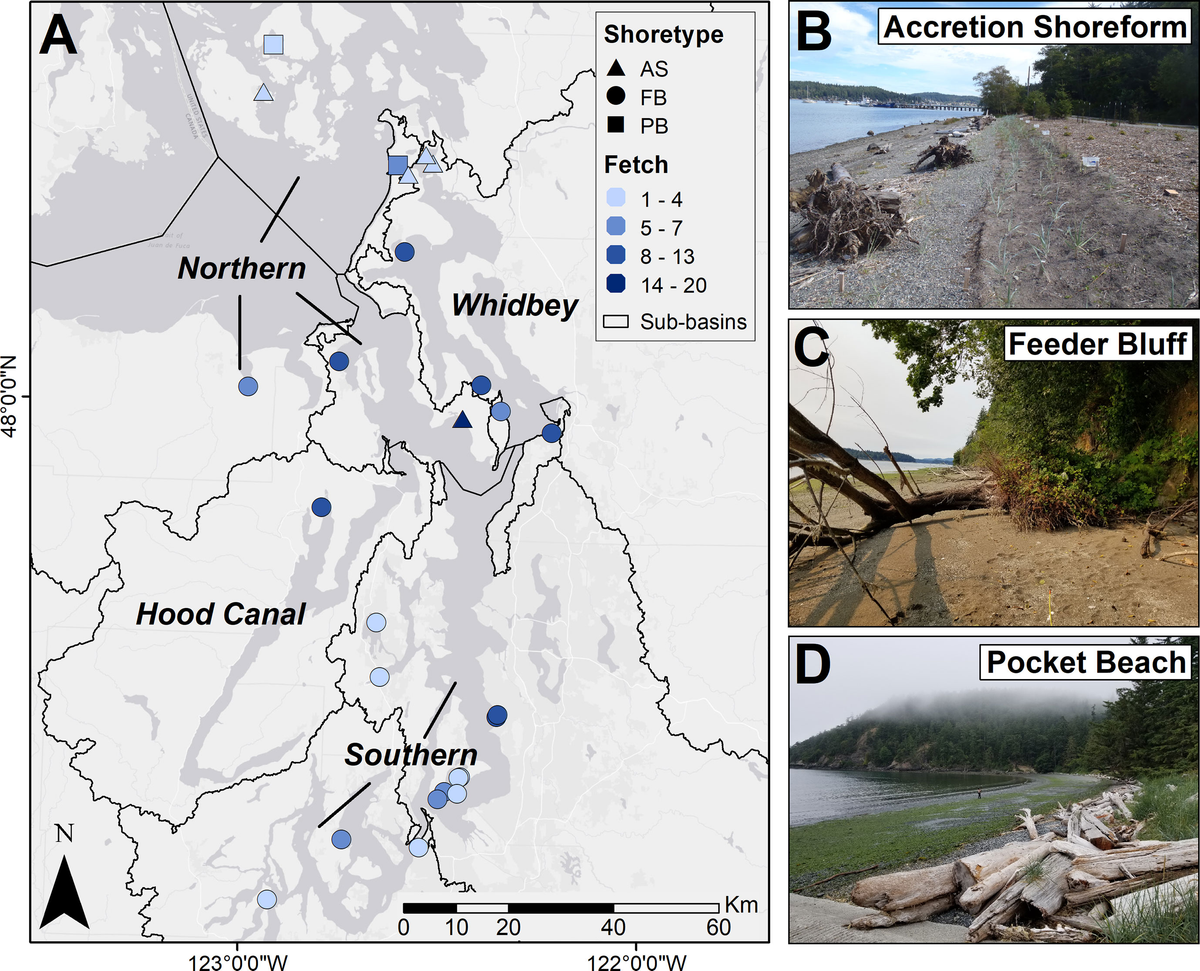
The article discusses the role of geophysical features in determining shoreline habitat function and restoration effectiveness, particularly in the context of the increased human modifications to coastal areas, such as armor placement. The study focuses on the Salish Sea, where various coastal landforms—feeder bluffs, accretion shoreforms, and pocket beaches—impact restoration outcomes for threatened species like juvenile fishes and invertebrates.

The study evaluates restoration efforts by comparing 26 restored beaches to natural beaches, assessing indicators like beach wrack cover, log counts, sediment composition, vegetation, and insect density across different shoretypes. Key findings indicate that natural beaches generally exhibited more overhanging vegetation and higher insect diversity than restored ones, suggesting longer recovery times for restored sites. Importantly, geophysical parameters such as shoretype and fetch (wave-generating distance) significantly influenced restoration results, while the amount of armor in surrounding drift cells did not show a significant effect.

The results reinforce the idea that effective coastal management and restoration planning should account for the diverse geophysical landscape features, as they mediate ecological responses and restoration success. Overall, while shoreline restoration can achieve close-to-natural conditions, variability exists, highlighting the need for continued monitoring and possibly more time for ecosystems to mature after interventions. The article emphasizes a landscape-contextual approach to restoration, integrating geophysical features for more effective coastal management.

Source link

Coastal Enhancing Insights Landform Restoration Shoreline
Share. Facebook Twitter Pinterest LinkedIn Tumblr Email
Previous ArticleTurning the Tide: Preventing Extreme Events in a Changing Climate
Next Article Exploring Soil Degradation in Andean Watersheds Through Remote Sensing
leebenda
Terrain News
  • Website

Related Posts

Innovative Insights from Alexey Voinov at AAAS

January 10, 2026

Celebrating the Wonders of Geodiversity: International Geodiversity Day 2023

January 10, 2026

Barnet Selectboard Moves Forward with Stream Restoration Initiative

January 10, 2026
Top Posts

Steamboat Secures $5 Million for River Revitalization

January 25, 202520 Views

Harnessing Machine Learning to Enhance Extreme Weather Alerts

January 8, 202519 Views

Influence of Stratospheric Conditions on Extreme Weather in North America

February 2, 202515 Views
Stay In Touch
  • Facebook
  • YouTube
  • TikTok
  • WhatsApp
  • Twitter
  • Instagram
Most Popular

Steamboat Secures $5 Million for River Revitalization

January 25, 202520 Views

Harnessing Machine Learning to Enhance Extreme Weather Alerts

January 8, 202519 Views

Influence of Stratospheric Conditions on Extreme Weather in North America

February 2, 202515 Views
Don't Miss

Palisades Fire Anniversary: A Year of Healing and Reflection at Eaton

Coordinated Watershed Protection for Regional Sustainability

Firefighters Battle Major Wildfire Blaze

Popular This Week

Montana and Oregon Firefighters Unite as Bee Rock Creek Fire Surpasses 500 Acres

L.A. Wildfire Recovery Secures Billions in Support and Funding

Explore the Wonders of Whychus with COCC and Upper Deschutes Watershed Council

© 2026 Terrain News. All Rights Reserved.
  • About Us
  • Privacy Policy
  • Terms and Conditions
  • Disclaimer

Type above and press Enter to search. Press Esc to cancel.