

Close Menu
Terrain News
  • Environmental Science
  • Landforms & Habitats
  • Extreme Events
  • Watershed Restoration
  • Wildfire
What's Hot

Innovations in Wildfire Technology: Lessons Learned and Future Paths

Shapiro Administration Commits Over $17 Million to Pennsylvania Conservation Efforts

Arctic Wildfires Could Reduce Snow Cover by 18 Days, Straining Global Climate and Ecology

Facebook X (Twitter) Instagram
Facebook X (Twitter) Instagram Pinterest
Terrain News
TerrainWorks
  • Environmental Science
  • Landforms & Habitats
  • Extreme Events
  • Watershed Restoration
  • Wildfire
Terrain News
You are at:Home»Watershed & Environmental Science»Influence of Urban Growth on Lake Temperature at the Watershed Scale
Watershed & Environmental Science

Influence of Urban Growth on Lake Temperature at the Watershed Scale

Terrain NewsBy Terrain NewsMarch 31, 2025012 Mins Read
Share Facebook Twitter Pinterest LinkedIn Tumblr Email
Influence Of Urban Growth On Lake Temperature At The Watershed
Share
Facebook Twitter LinkedIn Pinterest Email

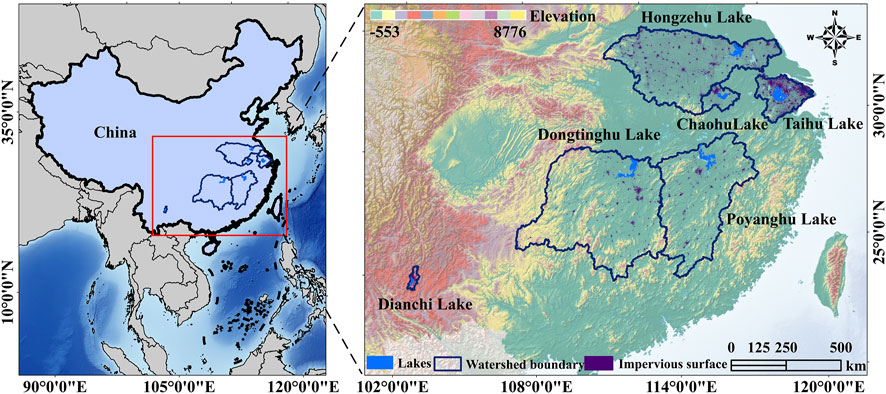
The article discusses the significant impact of urbanization and impervious surfaces (IS) on lake surface water temperature (LSWT) across several lakes in China. It emphasizes that LSWT is a critical factor for lake ecosystems and has shown a warming trend globally. The study focuses on six rapidly urbanizing lakes—Dianchi Lake (DCL), Poyanghu Lake (PYHL), Chaohu Lake (CHL), Dongtinghu Lake (DTHL), Hongzehu Lake (HZHL), and Taihu Lake (THL)—and employs a spatial influence equation (G) to quantify the impact of IS on LSWT, considering the distance between IS and the lakes, and lake area.

Key findings include:
1. In the years 2001-2018, IS has significantly expanded, with variations in growth rates among the lakes.
2. LSWT also exhibited a warming trend, but this was not consistently aligned with IS expansion—indicating that other factors like lake size and distance from IS also play crucial roles.
3. The correlation between LSWT and the G value shows stronger results for smaller watershed areas compared to larger ones.
4. The growth rates of ISA and LSWT were often inconsistent, highlighting the need to consider spatial distribution and distance effects when analyzing the impact of urbanization.

The study concludes that urban expansion significantly affects LSWT, necessitating urban planning and management strategies that mitigate this impact for ecological protection. Overall, the findings provide valuable insights for managing urban development in watershed areas to preserve aquatic ecosystems.

Source link

Growth Influence Lake Scale Temperature Urban Watershed
Share. Facebook Twitter Pinterest LinkedIn Tumblr Email
Previous ArticleFunding Freeze Delays Blue River Habitat Restoration in Silverthorne
Next Article North Gyeongsang Launches Support Initiatives for Wildfire Displaced Residents
leebenda
Terrain News
  • Website

Related Posts

Transforming Our Understanding of Climate Change: Insights from NOAA

January 22, 2026

Evaluating Watershed Health Ahead of Huron River Day 2024

January 20, 2026

Empowering Change for a Sustainable Future

January 19, 2026
Top Posts

Steamboat Secures $5 Million for River Revitalization

January 25, 202520 Views

Harnessing Machine Learning to Enhance Extreme Weather Alerts

January 8, 202519 Views

Influence of Stratospheric Conditions on Extreme Weather in North America

February 2, 202515 Views
Stay In Touch
  • Facebook
  • YouTube
  • TikTok
  • WhatsApp
  • Twitter
  • Instagram
Most Popular

Steamboat Secures $5 Million for River Revitalization

January 25, 202520 Views

Harnessing Machine Learning to Enhance Extreme Weather Alerts

January 8, 202519 Views

Influence of Stratospheric Conditions on Extreme Weather in North America

February 2, 202515 Views
Don't Miss

Innovations in Wildfire Technology: Lessons Learned and Future Paths

Shapiro Administration Commits Over $17 Million to Pennsylvania Conservation Efforts

Arctic Wildfires Could Reduce Snow Cover by 18 Days, Straining Global Climate and Ecology

Popular This Week

Climate Displacement: Weather-Related Disasters Outnumbered War in 2020

DEP Allocates $17.3 Million for 89 Local Projects to Enhance Streams and Restore Habitats Across 40 Counties

Deschutes County Explores Biochar Solution for Wildfire Waste Management

© 2026 Terrain News. All Rights Reserved.
  • About Us
  • Privacy Policy
  • Terms and Conditions
  • Disclaimer

Type above and press Enter to search. Press Esc to cancel.