

Close Menu
Terrain News
  • Environmental Science
  • Landforms & Habitats
  • Extreme Events
  • Watershed Restoration
  • Wildfire
What's Hot

QTS Data Centers Invests $1 Billion for Water Positive Future by 2035

Evacuation Alert for Scott as Wildfire Rages Uncontrollably

Enhancing Our Ecosystems: Riparian Forest Buffer Workshops on October 20 & 22

Facebook X (Twitter) Instagram
Facebook X (Twitter) Instagram Pinterest
Terrain News
TerrainWorks
  • Environmental Science
  • Landforms & Habitats
  • Extreme Events
  • Watershed Restoration
  • Wildfire
Terrain News
You are at:Home»Watershed & Environmental Science»Enhancing Watershed Resilience: Evaluating Management Practices Under Climate Change in So-okcheon, South Korea
Watershed & Environmental Science

Enhancing Watershed Resilience: Evaluating Management Practices Under Climate Change in So-okcheon, South Korea

Terrain NewsBy Terrain NewsFebruary 4, 2025022 Mins Read
Share Facebook Twitter Pinterest LinkedIn Tumblr Email
Enhancing Watershed Resilience: Evaluating Management Practices Under Climate Change In
Share
Facebook Twitter LinkedIn Pinterest Email

The article addresses the challenges of managing non-point source (NPS) pollution in South Korea, particularly due to its unique topographical and climatic characteristics. NPS pollutants, stemming from urban and agricultural areas, contribute to issues like toxic algal blooms and biodiversity loss. Best management practices (BMPs) have been proposed as solutions to mitigate these pollutants, yet the study specifically examines the effectiveness of combined BMPs—vegetative filter strips (VFS) and wetlands—compared to individual practices.

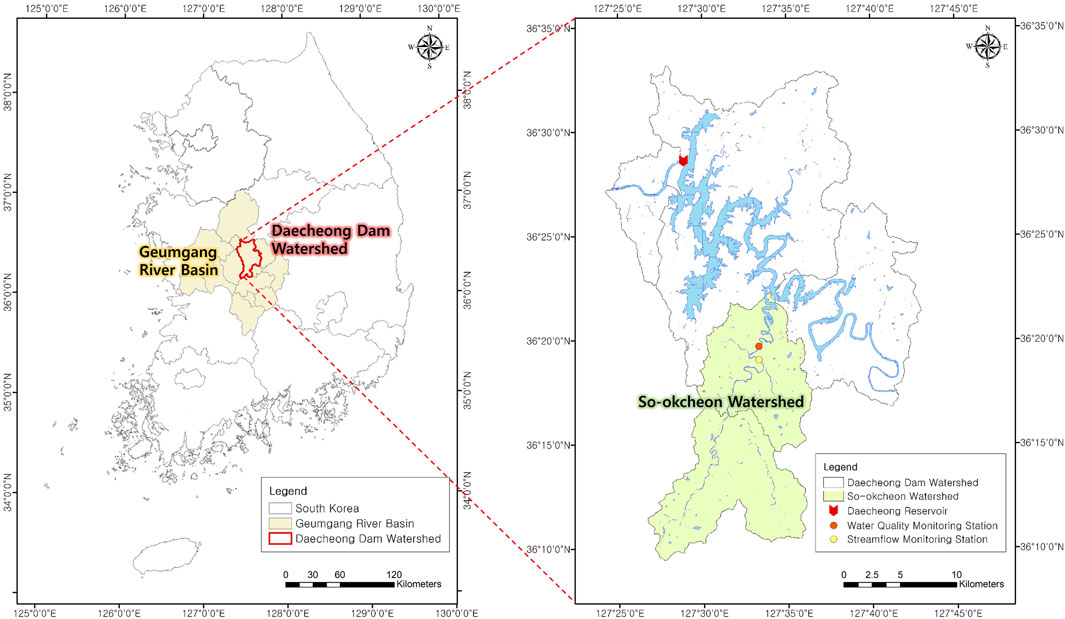
Utilizing the Soil and Water Assessment Tool (SWAT), the research focuses on the So-okcheon watershed, a critical area affecting Daecheong Lake’s water quality. The study simulates nutrient loads and assesses BMP performance, revealing superior pollutant reduction efficiencies when VFS and wetlands are used together (39.2% for TN and 47.6% for TP). Additionally, the study evaluates how BMP efficiency may evolve under different climate scenarios projected through Shared Socioeconomic Pathways (SSPs), finding that combined BMP approaches remain robust even under severe climate conditions.

The findings emphasize the need for tailored BMP strategies in managing NPS pollution, advocating for their adaptable implementation across varying climate scenarios. Overall, the article highlights the importance of informed decision-making in selecting BMPs for effective water quality management in South Korea’s complex landscapes. The study also suggests further exploration into cost-effectiveness and localized BMP impacts for future research.

Source link

Change Climate Enhancing Evaluating Korea Management Practices Resilience Sookcheon South Watershed
Share. Facebook Twitter Pinterest LinkedIn Tumblr Email
Previous ArticleThe Intersection of Geophysical Sciences and Insurance Solutions
Next Article Texas Panhandle Agencies Unite for Early Winter Wildfire Prevention
leebenda
Terrain News
  • Website

Related Posts

Enhancing Our Ecosystems: Riparian Forest Buffer Workshops on October 20 & 22

September 15, 2026

Funding Boost for Watershed Projects in Berks Through Schuylkill River Restoration Fund

September 14, 2026

Empowering Students to Tackle Environmental Challenges with GIS Skills

September 13, 2026
Top Posts

Steamboat Secures $5 Million for River Revitalization

January 25, 202523 Views

Assessing Climate Change and Human Influence on Runoff in a South China Tropical Watershed

February 3, 202520 Views

Impact of Glacier Retreat on Land Use and Ecosystem Services in High Andes

February 3, 202520 Views
Stay In Touch
  • Facebook
  • YouTube
  • TikTok
  • WhatsApp
  • Twitter
  • Instagram
Most Popular

Steamboat Secures $5 Million for River Revitalization

January 25, 202523 Views

Assessing Climate Change and Human Influence on Runoff in a South China Tropical Watershed

February 3, 202520 Views

Impact of Glacier Retreat on Land Use and Ecosystem Services in High Andes

February 3, 202520 Views
Don't Miss

QTS Data Centers Invests $1 Billion for Water Positive Future by 2035

Evacuation Alert for Scott as Wildfire Rages Uncontrollably

Enhancing Our Ecosystems: Riparian Forest Buffer Workshops on October 20 & 22

Popular This Week

The Ecological Consequences of Land Reclamation in Hong Kong

Enhancing Watershed Management through Hydrological Connectivity in a Changing Landscape

Are Natural Disasters on the Rise?

© 2026 Terrain News. All Rights Reserved.
  • About Us
  • Privacy Policy
  • Terms and Conditions
  • Disclaimer

Type above and press Enter to search. Press Esc to cancel.