


Summary
Trace elements are natural components found in terrestrial and aquatic environments, influenced by rock weathering and anthropogenic activities that alter biogeochemical cycles. Climate change also impacts metal cycling, stressing ecosystems with metal pollution.
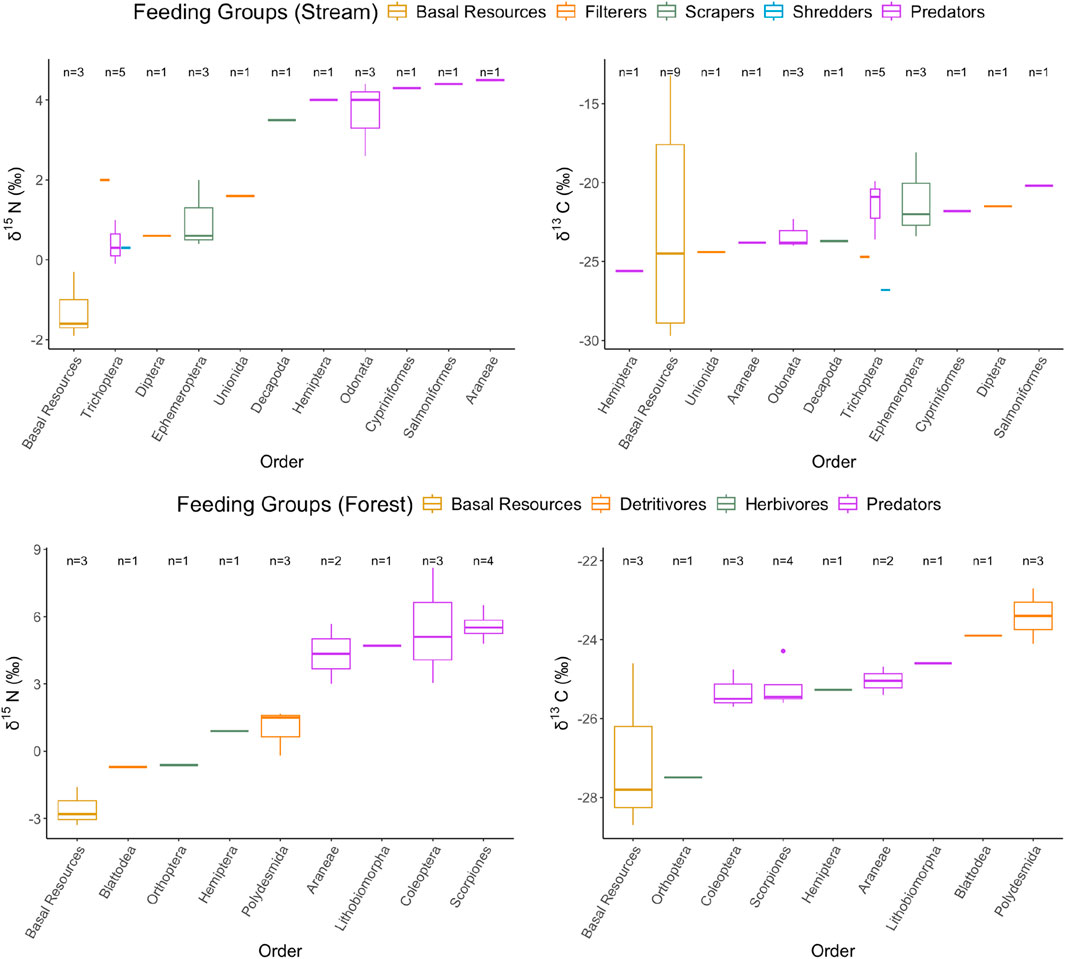
Research primarily targets polluted areas, but this study investigates trace element bioaccumulation in relatively pristine environments, specifically in a semi-remote forested watershed in northern California. The focus was on four trace elements: arsenic (As), cadmium (Cd), copper (Cu), and zinc (Zn). Using stable nitrogen (δ15N) and carbon (δ13C) isotopes, the study explored trophic relationships and the Trophic Magnification Factor (TMF) to evaluate trace element transfer efficiency.
Results show a complex food web structure where aquatic invertebrates are vital for transferring trace elements to higher trophic levels. The research reveals that Cu, Zn, and Cd biomagnify in both freshwater and forest food webs, but As biodiminishes in aquatic environments. This indicates more widespread trace element biomagnification than previously thought.
Inter-element relationships suggest that cationic metals (Cu, Zn, Cd) are bioavailable and subject to similar absorption pathways, enhancing their transfer. However, As, primarily existing as oxyanions, showed weak trophic transfer. Various factors—including bioavailability, organism physiology, and environmental conditions—affect these dynamics.
Future research is recommended to explore the influence of environmental factors and chemical speciation, providing critical baseline data on trace element transfer amidst rising global change and pollution challenges.
