

Close Menu
Terrain News
  • Environmental Science
  • Landforms & Habitats
  • Extreme Events
  • Watershed Restoration
  • Wildfire
What's Hot

Innovations in Wildfire Technology: Lessons Learned and Future Paths

Shapiro Administration Commits Over $17 Million to Pennsylvania Conservation Efforts

Arctic Wildfires Could Reduce Snow Cover by 18 Days, Straining Global Climate and Ecology

Facebook X (Twitter) Instagram
Facebook X (Twitter) Instagram Pinterest
Terrain News
TerrainWorks
  • Environmental Science
  • Landforms & Habitats
  • Extreme Events
  • Watershed Restoration
  • Wildfire
Terrain News
You are at:Home»Watershed & Environmental Science»Impact of Leaf Characteristics, Landscape Features, and Nutrient Inputs on Stream Water Quality in the Upper Midwest
Watershed & Environmental Science

Impact of Leaf Characteristics, Landscape Features, and Nutrient Inputs on Stream Water Quality in the Upper Midwest

Terrain NewsBy Terrain NewsFebruary 9, 2025002 Mins Read
Share Facebook Twitter Pinterest LinkedIn Tumblr Email
Impact Of Leaf Characteristics, Landscape Features, And Nutrient Inputs On
Share
Facebook Twitter LinkedIn Pinterest Email

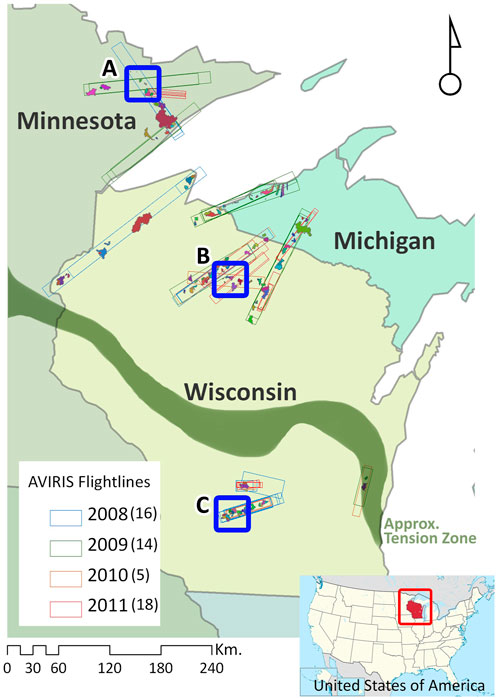
The article investigates the interactions of biotic and abiotic factors influencing stream water quality in mixed-use watersheds, focusing on agricultural and forested land uses. Key components affecting water quality include nutrient cycling, nitrogen and phosphorus export, and the implications for eutrophication and ecological health. Agricultural practices, especially fertilization, emerge as significant nonpoint sources of nitrate-nitrogen and phosphorus, while forest disturbances can also impact nutrient retention and export.

The study employs structural equation modeling to analyze the roles of four latent variables: foliar biochemistry (nutrient retention), watershed physiography, human land use, and watershed leakiness. Higher foliar nitrogen content relates positively to nutrient retention, while urbanized landscapes are linked with increased nutrient export. Results indicate that foliar traits significantly affect nutrient cycling, supporting the hypothesis that vegetation characteristics can shape watershed responses to anthropogenic influences.

The research highlights that in predominantly forested watersheds, foliar recalcitrance is vital for minimizing nutrient leakage, while in agricultural watersheds, wetland retention plays a crucial role in mitigating runoff. The use of imaging spectrometry allows for advanced assessments of landscape traits, suggesting that effective management strategies could incorporate targeted interventions based on these findings to improve water quality across diverse regions.

In conclusion, the study emphasizes the importance of integrating ecological data and innovative remote sensing technologies in watershed management to enhance resilience and sustainability. This comprehensive approach could inform practices aimed at fostering healthier ecosystems while addressing nutrient pollution challenges.

Source link

Characteristics Features Impact Inputs Landscape Leaf Midwest Nutrient Quality Stream Upper Water
Share. Facebook Twitter Pinterest LinkedIn Tumblr Email
Previous ArticleEvaluating Human Settlement Patterns in Arid Regions Using GIS Analysis
Next Article Surge in Private Armies Amid Los Angeles Wildfires
leebenda
Terrain News
  • Website

Related Posts

Transforming Our Understanding of Climate Change: Insights from NOAA

January 22, 2026

Evaluating Watershed Health Ahead of Huron River Day 2024

January 20, 2026

Empowering Change for a Sustainable Future

January 19, 2026
Top Posts

Steamboat Secures $5 Million for River Revitalization

January 25, 202520 Views

Harnessing Machine Learning to Enhance Extreme Weather Alerts

January 8, 202519 Views

Influence of Stratospheric Conditions on Extreme Weather in North America

February 2, 202515 Views
Stay In Touch
  • Facebook
  • YouTube
  • TikTok
  • WhatsApp
  • Twitter
  • Instagram
Most Popular

Steamboat Secures $5 Million for River Revitalization

January 25, 202520 Views

Harnessing Machine Learning to Enhance Extreme Weather Alerts

January 8, 202519 Views

Influence of Stratospheric Conditions on Extreme Weather in North America

February 2, 202515 Views
Don't Miss

Innovations in Wildfire Technology: Lessons Learned and Future Paths

Shapiro Administration Commits Over $17 Million to Pennsylvania Conservation Efforts

Arctic Wildfires Could Reduce Snow Cover by 18 Days, Straining Global Climate and Ecology

Popular This Week

Climate Displacement: Weather-Related Disasters Outnumbered War in 2020

DEP Allocates $17.3 Million for 89 Local Projects to Enhance Streams and Restore Habitats Across 40 Counties

Deschutes County Explores Biochar Solution for Wildfire Waste Management

© 2026 Terrain News. All Rights Reserved.
  • About Us
  • Privacy Policy
  • Terms and Conditions
  • Disclaimer

Type above and press Enter to search. Press Esc to cancel.